

For many optometry students and early-career ODs, the clinical path is clearly marked. The business path is often less obvious.
Which first job makes sense? When is practice ownership worth considering? How should a new graduate think about student debt, equipment investment, associate roles, specialty services, or eventual ownership? What are the trade-offs between income, autonomy, risk and lifestyle?
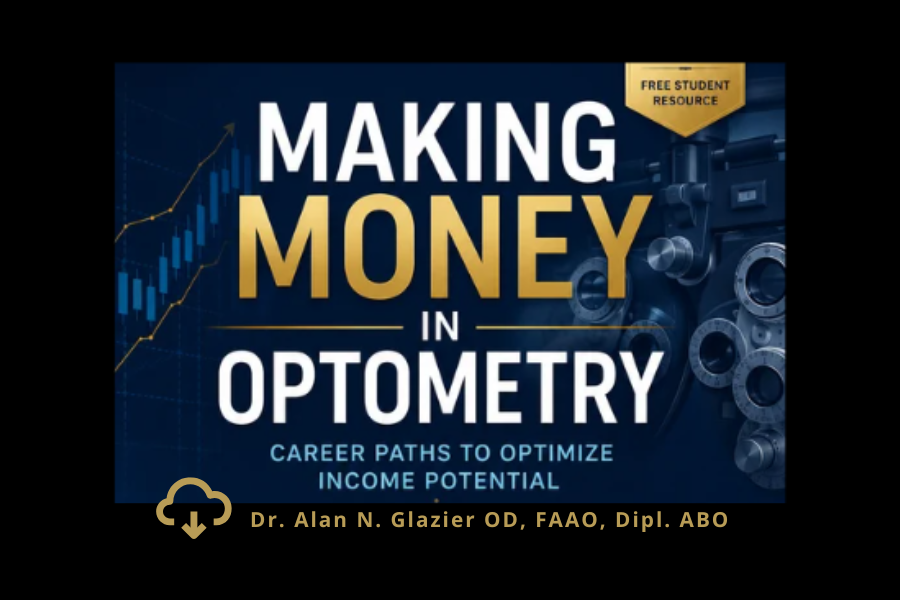
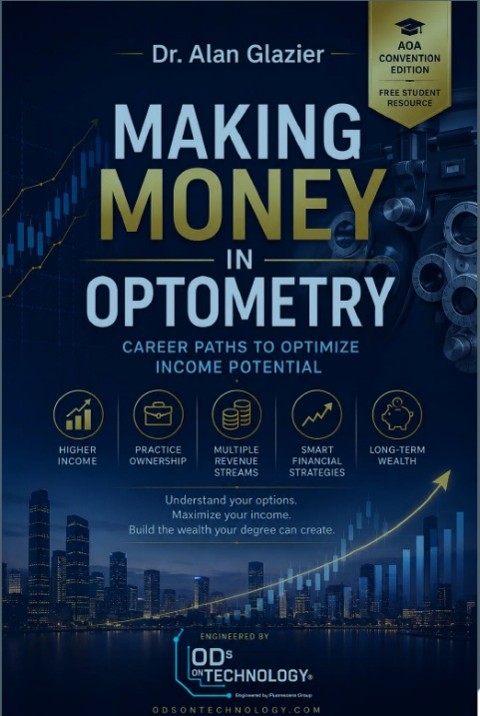
These are the kinds of questions explored in Making Money in Optometry: Career Paths to Optimize Income Potential, a new book by Dr. Alan Glazier, founder of ODs on Facebook. The book is now available as a free download.
While the title is direct, the underlying message is practical: career outcomes are shaped by real decisions.
 |
“ This book is written for optometry students and young optometrists who are not financially sophisticated. You don’t need a finance background to read it. You need only a willingness to absorb new information and think a little more deliberately about the choices in front of you than most of your colleagues will.”
Dr. Alan Glazier, OD, FAAO |
A Plain-Language Look at the Business Side of Optometry
Dr. Glazier frames the book around a gap many optometrists will recognize: clinical training is extensive, but the business and financial mechanics of a career in optometry are not always taught in the same structured way.
The book begins by asking readers to think more deliberately about what they are trying to build. Is it practice ownership, financial independence, a highly specialized clinical niche, more flexibility, a strong associate career, or a balanced professional life?
The point is not that every OD should pursue the same destination, but that career choices become clearer when they are made with a defined purpose.
From there, the book moves into the decisions that shape income and opportunity: different practice settings, ownership models, the role of debt, investment in equipment, delegation, specialty care, real estate, consulting, industry work and long-term saving.
Career Paths, Trade-Offs and Ownership Models
One of the book’s central sections examines different optometric career paths and their relative earning potential. These include academic roles, retail and corporate settings, independent practice associate positions, hospital and health-system roles, non-clinical industry positions, corporate leaseholder arrangements and independent ownership.
 The tone is direct, but the message is broader than compensation alone. Each path carries its own mix of income potential, risk, autonomy, schedule expectations, benefits, business responsibility and long-term opportunity.
For students and new graduates, this kind of comparison can be especially valuable. Early career choices are often made quickly, sometimes based on geography, salary, mentorship, debt pressure or the first attractive offer. Dr. Glazier encourages readers to look beyond the first contract and consider how each path may affect future flexibility and long-term goals.
The book also gives significant attention to practice ownership. It outlines three routes into independent practice: buying an existing practice, opening cold, and the less-discussed “practice within a practice” model. Each path is presented with its own risk profile, practical considerations and potential advantages.
Practical Decisions, Not Abstract Theory
A recurring theme throughout the book is that financial progress in optometry is often built through practical, incremental decisions.
That includes understanding the difference between gross and net income, knowing when to invest in revenue-producing equipment, building systems that allow delegation, considering specialty care opportunities, and recognizing that higher income does not automatically translate into long-term wealth.
Dr. Glazier also addresses side income opportunities that build on an OD’s professional expertise, such as key opinion leader work, consulting and clinical trials. His argument is not that every optometrist needs a side venture, but that an OD degree can create opportunities beyond the exam room when applied strategically.
The final section of the book focuses on the distinction between earning and building wealth. For younger ODs in particular, the message is straightforward: saving early, investing consistently and making disciplined financial choices may matter as much as choosing the highest-earning career path.
Why This May Resonate with Canadian Students and ODs
Although many of the book’s examples and compensation references are U.S.-based, the broader questions are highly relevant to Canadian optometry students and practitioners.
Canadian ODs face many of the same career decisions: whether to practice as an associate, pursue ownership, work within a corporate-affiliated model, or build a more specialized clinical niche.
They must also consider how to think about debt, when to invest in technology, how to evaluate different practice models, and how to balance professional ambition with lifestyle and personal goals.
Readers should, of course, interpret any financial figures, lending assumptions, taxation issues or regulatory considerations in the context of their own province and seek advice from qualified Canadian financial, legal and practice advisors where appropriate.
Still, the book’s central value lies in prompting better questions. What kind of career am I building? What decisions will increase my options? What risks am I prepared to take? What do I need to learn about the business side of practice before making a major move?
Download the Free Book
Making Money in Optometry is available now as a free download.
For optometry students, residents and new graduates, it offers a practical introduction to the career and business decisions that often arrive sooner than expected. For established ODs, it may serve as a useful prompt to revisit current assumptions and consider whether the next stage of practice should look different from the last.
This post is sponsored by Fluorescene Group