


Dr. Kerry Salsberg’s Eyes on Sheppard doesn’t chase growth for growth’s sake. It grows by design—one decision, one system, one patient at a time.
At OSI Group, we support a network of more than 900 independent optometry clinics across Canada—each with its own vision of what success looks like. For some, it’s about expansion. For others, it’s about specialization, community presence, or work-life balance. No two clinics run the same way, and that’s the point. Independence gives space for this kind of professional freedom.
Eyes on Sheppard, a long-standing practice in midtown Toronto, is one example of what that can look like in practice. Under the leadership of Dr. Kerry Salsberg, the clinic has spent the past three decades refining its systems, expanding its team, and shaping an environment that reflects a clear sense of purpose.
In an era when consolidation has swept across the healthcare industry and burnout threatens even the most committed providers, Eyes on Sheppard offers a different kind of case study. It’s become one of Toronto’s most respected independent clinics, not by being the biggest, the busiest, or the flashiest, but by maintaining a clear focus on what it does best—and resisting the pressure to do more for the sake of growth alone.
Designing for Consistency
Salsberg doesn’t treat management as an afterthought or a task to squeeze into clinical downtime. It’s embedded in the way the practice is designed. Every element—scheduling, training, workflows—is built to reinforce consistency across the clinic.
This philosophy shows up in the details. Appointments are booked at 30-minute intervals, giving doctors room to connect, observe, and adjust. Staff are trained not only in process, but in presence, with feedback is built into the workflow. The team is expected to listen closely, take note of what matters to each person, and create the kind of interaction that’s often missing from other healthcare experiences.
While the broader industry continues to prioritize speed, Salsberg’s clinic is deliberately structured around time. That extra time is what makes real connection possible, and what keeps the work meaningful.
A Pandemic-Era Lesson in Slowing Down
This belief was tested during COVID-19. As patient volume dropped and schedules shrank, many clinics scrambled to make the math work. But at Eyes on Sheppard, something unexpected happened.
“We saw fewer patients during COVID, but our revenue per patient went up—and so did my enjoyment of optometry,” Salsberg says.
The experience confirmed something he’d suspected for years: slowing down wasn’t a liability. It was a strategy. The clinic leaned into the insight. Appointments got longer, handoffs were minimized, and patient conversations grew deeper.
Data Without Delay
With a more measured pace of care, each appointment carries greater weight—financially and clinically. To keep that model viable, Eyes on Sheppard relies on real-time feedback. Subtle shifts in volume, case mix, or follow-through can have an outsized impact, so the clinic needs to spot patterns early—before they turn into problems.
Every morning, Salsberg checks key metrics like revenue per patient, service mix, prescription fulfillment, and no-show rates. These insights are made possible by Optosys, OSI Group’s practice management platform, which integrates data from across the clinic in a way that supports independent workflows
“What I love about our EMR is that I can get the pulse of the practice with one click,” he says. “That’s how you pivot in real time.”
Instead of waiting for quarterly reviews or year-end recaps, Salsberg and his team operate on short feedback loops. If something’s off, they fix it. If something’s working, they double down.
The Case for Coaching
Of course, even with strong systems and solid data, growth doesn’t happen automatically. At Eyes on Sheppard, coaching plays a central role in helping the clinic stay aligned and intentional.
“I love using business coaches,” Salsberg says. “We’re not perfect—we always want to improve our numbers, experience, and how we care for patients.”
He meets regularly with his OSI Practice Advisor, Jas, who works directly with the clinic’s leadership team to flag missed opportunities and suggest operational adjustments. This might mean rebalancing appointment types, revisiting pricing, or refining how services are communicated in the exam room.
“They provide operational support and leadership tools behind the scenes.” he says, “They understand what’s working across the industry, which is so missing in services today.”
Not Bigger—Just Better
Growth wasn’t the goal. Not really. Over the years, Eyes on Sheppard has expanded: more space, more services, more staff. But the clinic never scaled for its own sake. It scaled because it knew what kind of environment it wanted to offer.
The result? A practice that grew not from pressure, but from principle. Every decision was rooted in preserving the kind of workplace worth showing up to every day.
“I enjoy going to work as much today as I did when I started.” Salsberg says, “That’s a gift worth cultivating.”
Indeed, this kind of growth takes intention—and support. As a long-time OSI member, Salsberg relies on a broader infrastructure that helps the clinic stay independent while adapting over time. From operational planning to performance tracking, OSI provides the tools and coaching that allow clinics like Eyes on Sheppard to evolve without losing focus.
Ready for What’s Next
Eyes on Sheppard’s strength lies in its clarity—about what works and what’s worth protecting. For Salsberg, that’s the long game, a practice where people still look forward to Monday. A clinic built to last.
“Dream big.” He says, “Create memorable patient experiences. Have fun doing what you do, and don’t be scared. The sky isn’t falling.”
OSI Group helps independent optometrists run stronger, smarter clinics—without compromising on care. Learn more at www.opto.com, or hear more from Dr. Salsberg in his interview on the Future Focus podcast here.











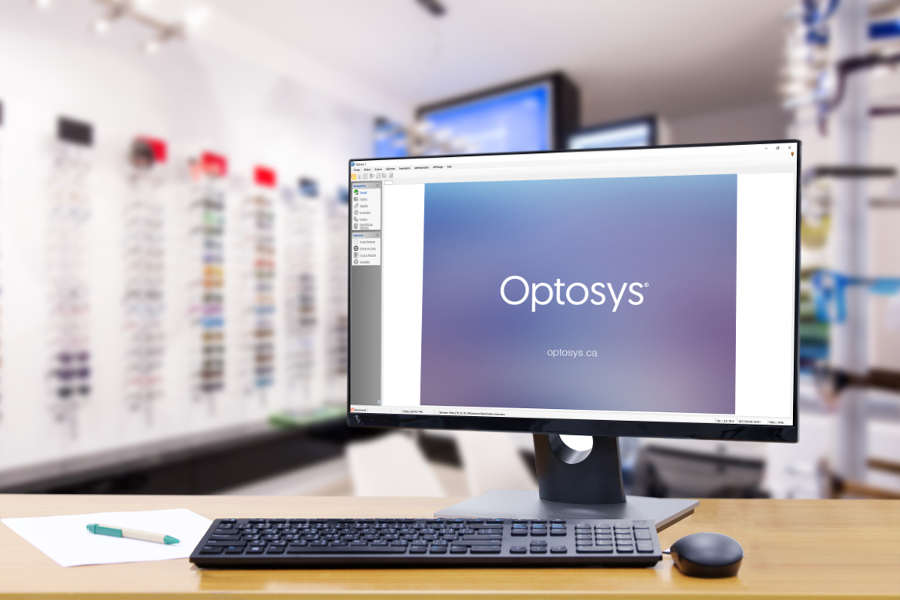
 The first thing a patient wants to be able to do is schedule an appointment at any time of the day without having to depend upon someone answering the phone at the other end. The eBooking module in Optosys gives the patient online access to pre-selected time slots determined by the ODs. When a patient books an appointment, it is automatically updated in the PMS. The patient gets an automated response to confirm the appointment.