



Most optometrists make risk decisions every day without labelling them as such. Insurance decisions are rarely about absolutes. They are about trade-offs. Which risks are worth transferring and which are better carried?
With summer vacations being on everyone’s mind, travel bookings are a good example. The choice between a non‑refundable rate and a fully refundable one is something we have all contemplated.
The Scenario
A recent search for an August weekend in Banff illustrates this well. The promotional, non‑refundable rate came in at $834. The fully refundable option was $950.
That decision point offers a useful lens for thinking about insurance more broadly, particularly when the stakes move from discretionary spending to income protection.
Putting a Price on Flexibility
The $116 upcharge represents roughly 14% of the base room rate.
In effect, the hotel is offering insurance against a specific risk: the possibility that plans change. Illness, weather, family needs, or simple timing conflicts could make the trip impractical. Paying more converts uncertainty into flexibility.
Many travelers accept this trade‑off without hesitation. The dollar amount is known, the risk is easy to understand, and the downside of losing the full $834 feels tangible and uncomfortable.
What about the Alternative?
The loss being insured is finite. If for some reason you don’t get to Banff, you have lost out on your pre-paid rate of $834. The financial impact is contained. Nevertheless most of us will still be irritated by “throwing that money away”, despite the fact that it’s not likely to alter our long‑term financial plans.
Still, the market price for that certainty is clear: about 14%. And you may be willing to throw away the $116 in case you do have to cancel.
Scaling the Same Logic to Income
Now consider a very different risk.
Imagine you earn about $160,000 of self-employed income. How much do you and your family depend on your ability to earn this income? What would happen if you suddenly found yourself not just unable to attend your Banff vacation, but you actually land in the hospital because you’ve become seriously injured or ill? It won’t just take away your August weekend but takes you out of your work for six months or more.
NOTE: this income equates to about $100,000 of after tax annual insurable benefit.
What’s the Cost?
This is not an extreme scenario. Statistics Canada data consistently show that working Canadians face a one in three probability of disability lasting longer than 90 days during their careers, with a smaller but very real subset experiencing long‑term or permanent impairment.
Applying the same 14% “insurance cost” logic used in the hotel example produces a striking comparison.
Fourteen percent of a $100,000 annual benefit is $14,000 per year.
Most optometrists would immediately recognize this as far higher, up to 4x higher, than typical disability insurance premiums for that level of coverage, even with robust definitions and long benefit periods.
Why the Comparison Feels Uncomfortable
The discomfort isn’t mathematical. It’s behavioural.
We are generally more willing to pay a visible premium to protect a known, short‑term expense than to commit to ongoing premiums for a lower overall‑claim probability, high‑impact risk, even when the latter carries far greater financial consequence.
A cancelled trip is easy to picture. A long-term disability is abstract, emotionally distant, and uncomfortable to contemplate. As a result, the value of the insurance protecting against it is often discounted, even when the pricing is far more favourable on a proportional basis.
In the Banff example, the insurer (the hotel) is charging 14% to protect a few days of discretionary spending. In the disability example, insurers often charge a much smaller percentage of about 3% of the insured benefit to protect a decade or more of core income.
Risk You Can Absorb vs. Risk You Can’t
This contrast highlights an important distinction: not all risks deserve the same treatment.
Many optometrists can comfortably absorb the loss of an $834 hotel room. Cash flow may be dented, but life goes on. The loss does not compound, and it does not threaten future earning capacity.
Income loss from disability is different. It affects not only spending, but savings, debt servicing, practice viability, and long‑term independence. It is also difficult to self‑insure without very substantial capital already in place.
From a proportionality standpoint, disability insurance is often protecting something far more critical at a lower relative cost than many everyday “insurance‑like” decisions.
The Quiet Role of Behavioural Comfort
This isn’t an argument against refundable hotel rooms. Comfort has value, and certainty can be worth paying for, particularly when plans involve family or limited travel windows.
Rather, the comparison invites reflection. Many routinely pay double‑digit percentages to insure modest, temporary risks, while hesitating over single‑digit percentages to insure the asset that underpins everything else: your ability to earn.
That gap often has less to do with economics and more to do with what feels immediate and relatable.
A Proportional Way to Think About Insurance
Looking at insurance decisions through a proportional lens can bring clarity:
- How large is the potential loss?
- How long would the impact last?
- What percentage of the protected value am I paying to transfer the risk?
When framed this way, the question shifts from “Is this premium expensive?” to “Is this risk one I can realistically afford to assume?”
For many optometrists, the answer differs sharply between cancelled travel plans and prolonged loss of income.
A Grounded Takeaway
The Banff hotel example is not about travel. It’s about perspective.
When a 14% upcharge to protect a weekend getaway feels reasonable, it creates a useful benchmark for evaluating how we price certainty elsewhere in our financial lives. Disability insurance, viewed through the same proportional lens, often reveals itself not as costly protection, but as comparatively efficient risk transfer.
And that realization tends to come not from fear, but from calmly comparing what we insure, how much we pay, and what truly matters if plans don’t go as expected.
Have more questions? We’re here to help.
Roxanne Arnal is a Certified Financial Planner®, Chartered Life Underwriter®, Certified Health Insurance Specialist, former Optometrist, Professional Corporation President, and practice owner. She is dedicated to empowering individuals and their wealth by helping them make smart financial decisions that bring more joy to their lives.
This article is for information purposes only and is not a replacement for personalized financial planning. Errors and Omissions exempt.
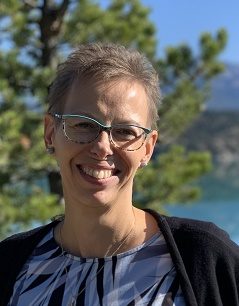
ROXANNE ARNAL,
Optometrist and Certified Financial Planner
Roxanne Arnal graduated from UW School of Optometry in 1995 and is a past-president of the Alberta Association of Optometrists (AAO) and the Canadian Association of Optometry Students (CAOS). She subsequently built a thriving optometric practice in rural Alberta.
Roxanne took the decision in 2012 to leave optometry and become a financial planning professional. She now focuses on providing services to Optometrists with a plan to parlay her unique expertise to help optometric practices and their families across the country meet their goals through astute financial planning and decision making.