

Dr. Miranda The Art of Mentorship article

Benjamin Franklin once said, “Tell me and I forget, teach me and I remember, involve me and I learn.” Centuries later, Winston Churchill admitted, “I am always ready to learn but I do not always like being taught.” These perspectives capture the delicate balance of effective mentorship: the need to actively engage learners while respecting that not everyone learns the same way or at the same pace.

After 30 years in practice, I’ve shifted much of my energy toward mentoring the next generation of eyecare professionals. Here are some insights I’ve gathered along the way.

Learning Needs to be an Institutional Core Concept

A learning organization is always looking to improve. Learning must be part of your core values, which means embracing change and maintaining genuine excitement about delivering better patient care. It’s crucial to recognize that we all can learn from each other, regardless of position in the organization or educational background. The optical assistant may have insights the optometrist needs to hear, and vice versa.

When the Student is Ready, the Teacher Will Appear

This was one of my father’s favourite sayings. As a teacher himself, I wasn’t completely convinced his mantra made sense at the time. Over the years, though, I’ve come to appreciate its wisdom: not everyone is immediately ready to learn new things, nor will they always accept your expertise right away. Don’t take it personally. Continue to be available, build trust, and demonstrate your commitment to their growth. The student will come around when they’re ready.

Observation is often an underrated form of learning. Watching experienced team members navigate challenging patient interactions and exemplify best practices can be invaluable preparation before someone attempts these skills solo in real time.

Hire on Personality, Then Train the Skills

On my 40th birthday, my buddies took me golfing. A young woman was selling drinks on the course, and she was so personable that I recommended she switch gears and sell glasses instead.

The next day, she submitted her resume. She’s now been with our practice for 15 years and holds a leadership role championing our dry eye business.

The lesson? Watch for great personalities, then train the skills. It’s remarkable what motivated team members can achieve with proper training and mentoring. There’s deep satisfaction in developing talent internally, and it’s often more cost-effective too.

Much like a sports team that drafts and develops superstars rather than paying premium prices in free agency, having a portion of your team “home grown” helps manage staffing costs. While we should certainly recruit skilled talent from outside when needed, developing leaders through your internal ranks makes the business more sustainable and creates a culture of loyalty and growth.

The Teacher Becomes the Student

One of the great rewards of mentoring someone new to optometry or opticianry is that the teacher can learn too. Perhaps there’s a new methodology, a fresh clinical approach, or, heaven forbid, another acronym to master. Recently, a new graduate introduced me to enhanced imaging techniques for anterior segment OCT that have genuinely improved my diagnostic confidence.

We can always learn from each other. This exchange keeps practice fresh for veterans while reinforcing the recent education of newer team members. It’s a virtuous cycle when egos are left at the door.

Measurement and Auditing

It’s important to track metrics such as multiple pair sales, capture rates, and revenue per patient. This allows for benchmarking and helps identify training gaps. For instance, if capture rates are low, we can provide targeted coaching on frame selection techniques or patient communication strategies.

Continuous learning also means conducting periodic audits to assess comprehensive care delivery and implementation of best practices. Everyone needs to be open to assessment and improvement, including the practice owner and senior doctors.

When Egos Get in the Way

It takes genuine humility to learn from someone new rather than relying solely on years of experience. Rooted in fear of becoming obsolete or being viewed as outdated, some of us move forward in defensive ways that actually squelch learning and innovation.

Vulnerability is key here. Don’t guard against a bruised ego. Instead, normalize learning from mistakes and celebrate advancements in the collective knowledge of the team.

Personally, I’m excited about the next generation of doctors who graduate with an impressive amount of knowledge and skill. When I lecture, I encourage new graduates to find a more experienced mentor who will keep it real and support their growth. Then I tell them: get after it!

Mentorship isn’t a one-way street where knowledge flows from senior to junior. It’s a dynamic exchange that enriches everyone involved, strengthens your practice, and ultimately leads to better patient care. The art lies in creating an environment where both teaching and learning can flourish, where Franklin’s wisdom about involvement meets Churchill’s preference for discovery over instruction.
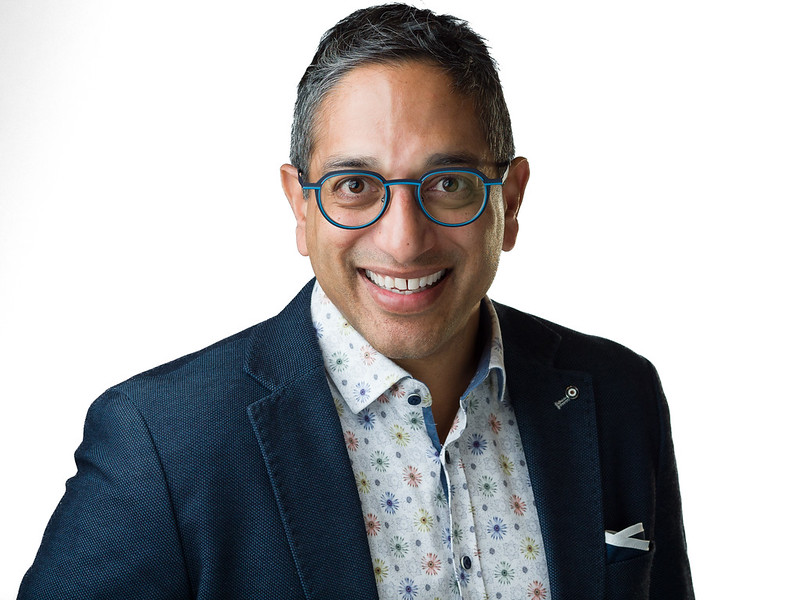
 

2024 Trevor Miranda

DR. TREVOR MIRANDA

Dr. Miranda is a partner in a multi-doctor, five-location practice on Vancouver Island.

He is a strong advocate for true Independent Optometry.

As a serial entrepreneur, Trevor is constantly testing different patient care and business models at his various locations. Many of these have turned out to be quite successful, to the point where many of his colleagues have adopted them into their own practices. His latest project is the Optometry Unleashed podcast.


Share:
Rate:

0 / 5. 0

The Human Equation in Optometry: OSI’s Vision for Independent Clinics

Clinical outcomes depend on more than accurate refractions or the latest diagnostic tools. The tenor of an exam often turns on how an optometrist handles stress, reads unspoken cues, and balances professional focus with human empathy. These quieter skills shape a career, yet they rarely appear in formal training.

That gap has become part of OSI Group’s agenda. While continuing education in optometry has traditionally centred on procedures and equipment, OSI has pushed the conversation further—spotlighting members who place mental health and emotional intelligence at the centre of professional practice.

Independent practice thrives when these skills are recognized as core strengths. The ability to steady a patient’s stress or carry the long haul of decision-making defines not only the quality of care but the sustainability of a clinic.

It’s here that OSI’s commitment to whole-practice development comes into focus, as members themselves take the conversation forward. In recent months, two OSI-linked projects have highlighted these themes: Uncover Your Eyes—Dr. Meenal Agarwal’s series on stress, empathy, and brain science—and a candid discussion on the Future Focus podcast featuring guest Dr. Hansel Huang. Together they show how the profession is beginning to define excellence in broader terms.

Dr. Meenal Agarwal on Mental Health

For OSI Member and podcast host Dr. Meenal Agarwal, the profession’s limited focus on stress management and high-pressure decision making has become a critical gap. Through her program Uncover Your Eyes, she argues that mental health is not a private concern to be managed outside the clinic, but a clinical strength that shapes daily interactions with patients and staff.

“I want ODs to embrace mental health as part of professional excellence,” she says. “That means self-advocacy, boundary-setting, and emotional literacy in clinic routines. Sensitivity isn’t a weakness; it’s a clinical strength.”

She points out that optometrists who overlook their own mental state risk burnout and poor communication. Research on stress and cognition supports the link—when an OD carries unacknowledged strain into an exam room, it can alter their ability to listen and weigh information. Patients sense this, and outcomes suffer.

Uncover Your Eyes insists these skills belong alongside technical training. In a profession where continuing education is dominated by lenses and procedures, Dr. Agarwal makes the case that emotional steadiness is just as central.

Her message has gained traction within the OSI community, where innovation is increasingly defined not only by equipment and technique but by the human side of practice. By framing mental health as part of professional excellence, Dr. Agarwal is pushing optometry to expand its definition of what it means to lead a sustainable practice.

Dr. Hansel Huang on Finding Confidence

If Dr. Agarwal’s work shows how mental health can be taught as a clinical strength, Dr. Hansel Huang’s story illustrates what support looks like at the start of a career. The OSI Member recently shared his journey on Future Focus, a podcast hosted by Dr. Amrit Bilkhu and Dr. Alexa Hecht.

In the episode, Huang speaks candidly about pressures that extend far beyond the exam room: the sting of imposter syndrome, the weight of patient responsibility, and the mental toll of unexpected exam changes such as the NBEO score revisions. Left unchecked, these stresses can compound into isolation and self-doubt.

What shifted his trajectory was connection. Early in practice, OSI Advisor Jas Ryat created space for open conversation and judgment-free problem solving. “Jas was so good, OSI was so good—it was like, yeah, let’s have meetings, let’s talk about it. The fact that there was no judging, just support and resources, was really cool,” Huang recalls. Having that sounding board helped him see that asking questions was not weakness but part of professional growth.

From there, he began to reframe stress as fuel rather than a flaw. On the podcast, Huang described moving from the mindset of doing what he was “supposed to” into a path of self-discovery—eventually becoming a mental health coach as well as an optometrist. He now helps peers turn fear into motivation, combat imposter syndrome, and foster healthier team cultures that value support over pressure.

His evolution from self-doubt to advocate shows how targeted intervention at the right moment can change a career arc, and how these changes ripple outward as the next generation takes on leadership roles.

Lessons Across the Profession

The stories of Dr. Agarwal and Dr. Huang underscore that clinical skill alone does not define success. Their experiences highlight how stress management and empathy shape outcomes just as much as diagnostic accuracy. When viewed through the lens of the profession as a whole, these themes carry meaning for every stage of practice.

For students and new graduates, the message is that true practice readiness extends beyond technical skill. The ability to manage stress and communicate with empathy can shorten the steep learning curve after graduation and build confidence in early patient encounters.For clinic owners, the challenge is balancing multiple roles at once—clinician, employer, business manager. Emotional steadiness becomes a leadership asset, shaping how owners support staff and navigate the financial and strategic decisions that define the long run of a practice. This is where OSI’s resources matter most, offering resilience tools that make the load more manageable—whether through advisor support or targeted education.

For teams and staff, the benefits reach beyond the optometrist. Through initiatives like Uncover Your Eyes and the Future Focus podcast, OSI helps foster a clinic culture that values openness and empathy. When staff feel supported, patient experience improves, and the business as a whole becomes more adaptable.

A Broader Definition of Innovation

Too often, innovation in optometry is equated with the latest technology. OSI takes a wider view: real progress comes from investing in people. Innovation here means shifting from transactional care to transformational care, where the focus extends beyond the exam room into the relationships that sustain independent practice.

Independent practice is a network of relationships—between doctor and patient, owner and staff, clinician and community. OSI positions its members to see these connections as opportunities for growth rather than sources of strain. Patient stress becomes a chance to deepen trust. Leadership load becomes a test of resilience. Decision fatigue signals the need to adopt new ways of working.

By treating these realities as part of clinical life rather than distractions from it, OSI positions its members to adapt early and thrive. The result is a model of support that helps independent optometry stay resilient in a crowded healthcare landscape, and a reminder that the future of the profession depends as much on people as on procedures.

Support as a Standard for Care

Independence has always defined optometry, but connection is what sustains it. The stories of Dr. Agarwal and Dr. Huang show how shared resources and collective insight can turn everyday pressures into opportunities to grow.

For OSI Members, that means putting the network to use—drawing on practice advisors, exploring programs like Uncover Your Eyes, and inviting staff to join the conversation. For non-members, these stories are a window into what OSI offers: a community where independence is supported by shared resources, not carried alone.

Listen to Dr. Agarwal’s Uncover Your Eyes, Dr. Huang on Future Focus, and explore OSI’s resources at opto.com.

At OSI, we help you see further.


Share:
Rate:

0 / 5. 0