
If eyes are the windows into the soul, perhaps ears are the doorway to the heart. Both vision and hearing play huge roles in enjoying life. Whether it is the ability to read or the ability to participate in conversations, both are central to day-to-day connection and independence. Like vision, hearing deteriorates with age. Early detection and timely intervention can improve long-term vision and hearing health and overall wellness.
One Stop for Vision and Hearing Care
At three of our five clinics at Cowichan Eyecare, we have integrated hearing services. My brother is a Doctor of Audiology and leads our hearing care division.
Our first instinct was to operate in a silo and simply share space. Some of that may have stemmed from a fear of being viewed as nepotistic if we more closely integrated the vision and hearing offerings. Over time, we have continued to integrate both services in a more intentional way, and patient feedback has been overwhelmingly positive. The convenience of addressing hearing needs in a place you already trust for eyecare, or vice versa, has quelled our initial reservations about joint care.
There are also real economies of scale that create efficiency and cost savings with hearing and vision integration. We share a front desk and a call-answering system, which streamlines communication and scheduling. We use a common Practice Management System (PMS) for billing and recalls, which helps us keep patients on track with follow-up care. Shared restrooms and lunchrooms allow for efficient use of space, leaving more room for special testing or retail areas in the clinic.
One of the key differences between vision and hearing is that there is often a significant lag between the onset of hearing loss and the time a patient seeks corrective help. Increasing awareness in both disciplines, and cross-educating our teams, is a practical way to reduce that lag and get people the support they need sooner. In our experience, simply having both services under one roof creates more natural conversations about overall sensory health.
The Role of Hearing and Vision on Cognition
Hearing is inextricably linked to cognition. Audiologists often say the ears collect sound, but it is the brain that hears. There is substantial research highlighting a connection between untreated hearing loss and cognitive disorders. More recent research is also showing that improving hearing can reduce the risk of cognitive decline. Keeping our hearing healthy is an important part of keeping our brain in an optimal state.
Because we cannot fully close our ears the way we can close our eyes, the brain is constantly receiving and processing sound. This ongoing processing keeps the auditory centres of the brain engaged and “exercised.” When we hear, the brain chooses to pay attention to some sounds (for example, conversation) and to tune out others (for example, the hum of traffic). That filtering is work, and it is part of what makes hearing such an active, brain-driven process.
We all have a certain amount of cognitive capacity, or “brain power.” That resource is limited, and the amount we have available at any given time depends on many factors, including fatigue. When we have untreated hearing loss, we use cognitive resources, and often our vision as well, to fill in the blanks of what our ears are not giving us. In conversation, hearing is the first step before we can understand content. A hearing deficiency demands cognitive resources first, and whatever brain power is left over can then be used to process, remember, recall, think ahead, draw analogies, create and understand jokes, and stay engaged in the moment.
Research has shown a significantly higher incidence of cognitive disorder in people with untreated hearing loss. For example, individuals with hearing loss between the ages of 45 and 65 have been shown to have two to five times the risk of reduced cognition and dementia, depending on the severity of the hearing loss (Lin et al., 2011; Livingston et al., 2020). More recent research is beginning to show that when hearing loss is treated, cognitive performance can improve significantly (Jiang et al., 2023).
The primary advantage of correcting milder degrees of hearing loss may be the potential cognitive benefit. When missing sounds are filled in with assistive devices such as hearing aids, it reduces demand on limited cognitive resources. Those resources can then be deployed for higher-order tasks, including comprehension, memory, and social connection. In cases where vision is compromised such as macular degeneration optimizing hearing is even more important due to limited cognitive resource theory.
The Business Opportunity
Our metrics show that hearing care revenue represents about 30% of the eyecare revenue opportunity. That means that, with little added space, a significant additional source of revenue can be available in many eyecare clinic settings. A hearing booth is required, but the footprint is manageable and the impact can be meaningful. A hearing booth is simply a small, sound-treated room that allows accurate testing and fittings in a quiet environment. There are few eyecare subspecialties that can provide this amount of financial upside without major renovation.
Of course, the details matter. The revenue-sharing agreement needs to be worked out, and medical manpower needs to be accounted for, including appropriate compensation for the audiologist. When it is structured properly, the integration can be both clinically valuable and financially sensible.
Wearables as the Gateway
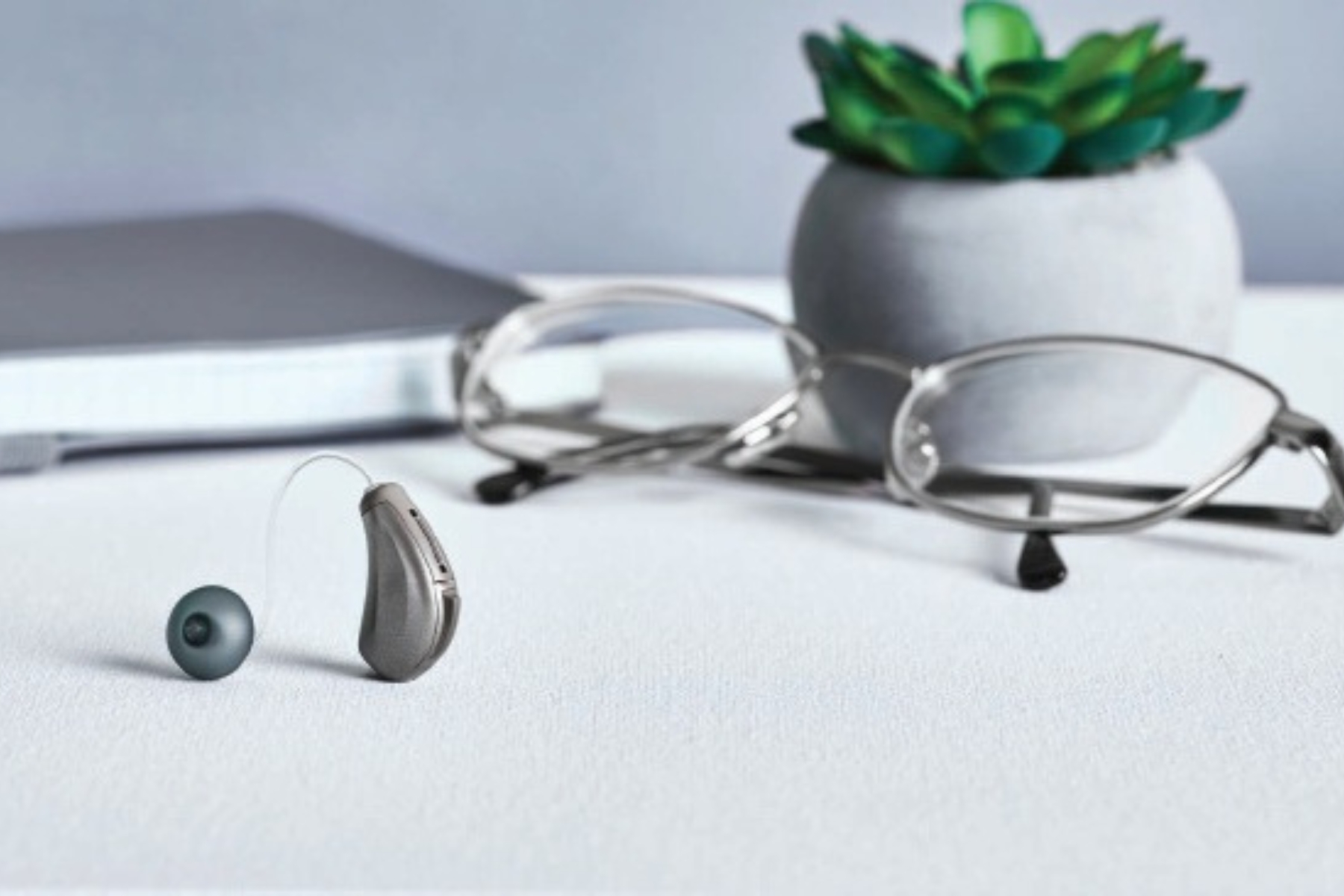
New eyeglasses are coming to market that will be hearing-assistive. These glasses will provide sound enhancement and refinement by cancelling noise and using directional microphones built into the frame. These hearing glasses will likely provide solutions sooner for patients with low to moderate hearing loss.
They will not replace customized hearing instruments, and they are not meant to. Still, as an entry point, hearing glasses can be assistive at a lower cost, while also delivering great vision with prescription lenses. For some patients, that may reduce barriers and normalize getting help earlier.
The Focus on Wellness
Optometry and eyecare will continue to evolve. Technological advancements in wearables, enhanced diagnostics, and individualized solutions will allow ECPs to support better overall health and wellness for our patients. Can you hear it? The future will be clear, and it sounds amazing!
If you have noticed the TV volume creeping up, or you find yourself asking people to repeat themselves more often, bring it up at your next eye exam. We can help you understand what is normal, what is not, and what the next step could be.

DR. TREVOR MIRANDA
Dr. Miranda is a partner in a multi-doctor, five-location practice on Vancouver Island.
He is a strong advocate for true Independent Optometry.
As a serial entrepreneur, Trevor is constantly testing different patient care and business models at his various locations. Many of these have turned out to be quite successful, to the point where many of his colleagues have adopted them into their own practices. His latest project is the Optometry Unleashed podcast.