


In part 1 of explored why data portability matters and the legal and technical challenges that can arise when switching EMRs in optometry clinics.
Now that the “why” is clear, it’s time to understand the “how.” In this article, we’ll look at how to make the data transition smooth, secure and ensure that it all safely arrives in the appropriate patient fields.
Migrating from one EMR to another is one of the most significant digital transformations a clinic can undertake. When done well, it can modernize workflows, improve operational efficiency, and strengthen patient care. Without proper preparation, however, it can lead to disruption, data loss, and frustration.
This guide outlines the essential steps for preparing your clinic for a smooth, secure, and compliant EMR migration.
Optometry-Specific Data Considerations
Optometry data presents unique challenges beyond those in general medicine. It combines clinical information, diagnostic imaging, and retail operations. Knowing exactly what data your current EMR holds—and how it’s structured—is the foundation of a successful migration.
Optometric data categories can include:
- Diagnostic Imaging: OCT scans, fundus photographs, and corneal topographies often exist in large, specialized file formats (like DICOM). Without proper planning, images may be reduced to static PDFs, losing their interactive diagnostic value. It is important to ensure the new EMR can import them, or integrate with image viewers that can.
- Refractive Prescription Data: Accurate migration of eyeglass and contact lens prescriptions is critical. If stored in proprietary or semi-structured fields, these values (sphere, base curve, diameter) must be carefully mapped to ensure accuracy in the new system.
- Dispensing and Inventory Records: Practices that use their EMR for optical sales, lens ordering, or frame inventory must decide whether to migrate this data or archive it separately.
- Device Integration: Diagnostic devices such as autorefractors, tonometers, and lensometers generate logs and measurements that must remain retrievable. Ensure that these files can either be migrated or securely archived, and verify that the new EMR supports existing device integrations.
- Patient Consent and Signatures: Electronic signatures and digital consent forms are legally binding and must remain properly linked to patient files after migration.
- Recalls, Reminders, and Visit History: Recall schedules, reminders, and visit histories form the backbone of ongoing patient management. When migrating EMRs, it is important to ensure that patient histories, previous diagnoses (e.g., glaucoma, diabetic retinopathy), and recall intervals transfer completely. This preserves continuity of care and supports proactive follow-up with patients.
💡 Quick Tip: Create a data inventory spreadsheet listing each data type, where it resides, and whether it needs to be migrated, archived, or can be left behind.
Key Considerations Before You Switch
Long before signing a contract with a new EMR vendor, it’s important to ask the right questions. The clarity that is established at an earlier stage will define the success of the migration later on.
- Export Formats: Ask the current vendor how data will be exported. Will it be delivered as structured data (e.g., HL7 or FHIR standards) or unstructured PDFs? Structured data allows for better integration and ongoing use.
- Costs and Timelines: Data extraction and migration often involve fees. Obtain written estimates outlining costs, timelines, and the level of support included.
- Security Measures: Ensure all data will be encrypted during transfer, and that storage and hosting comply with Canadian and provincial data requirements.
- Validation Testing: Conduct a pilot migration using a small dataset. Compare records between systems to confirm accuracy before proceeding with a full migration.
- Access to Legacy Records: Even with a successful migration, some data may remain easier to view in the old system. Ensure maintenance of read-only access to legacy records for reference.
🔒 Did You Know?
Under Canadian privacy law, optometrists remain the custodians of patient data even after switching vendors. This means the optometrist is responsible for its integrity and accessibility during and after migration—not the EMR provider.
Preparing for an EMR Migration
A structured plan is the strongest indicator of success. Clinics that invest time in preparation, communication, and testing, experience far fewer disruptions once the new EMR goes live.
- Inventory Your Data: Catalogue the types of information stored in the current EMR—demographics, clinical notes, prescriptions, imaging, billing, and administrative data.
- Engage Both Vendors: The smoothest migrations occur when the outgoing and incoming vendors communicate directly. Define clear migration deliverables, timelines, responsibilities, and success criteria in the new vendor’s contract.
- Plan for Staff Training: Staff should be trained not only on the new system but also on how to access legacy data and verify migrated records.
- Schedule Wisely: Choose a transition window that minimizes patient disruption—ideally outside peak exam seasons.
- Budget Realistically: Factor in not only vendor fees but also staff time, temporary productivity dips, and any dual-system access costs.
🧭 Quick Tip: Migrate in stages. Start with a small batch of patient records, validate accuracy, and then expand. Incremental testing builds confidence and minimizes risk.
Validation and Testing
Once a pilot migration is complete, validate the data thoroughly. Compare patient records across systems to ensure accuracy of key fields such as diagnoses, prescriptions, and imaging files. Pay close attention to dates, authorship, and attachments—these are often the first areas where discrepancies arise.
Involve staff from various roles in the validation process; clinicians and administrative users often notice different types of errors. Once the pilot data is confirmed accurate and functional, proceed with the full migration confidently.
The Bottom Line for Clinics
Migrating to a new EMR is a significant undertaking, but it doesn’t have to be disruptive. By planning strategically—mapping data carefully, ensuring vendor collaboration, testing thoroughly, ensuring legal compliance, and training staff—years of valuable patient information can be protected while setting your clinic up for long-term success.
Ultimately, a well-executed migration is not just about transferring data—it’s about preserving clinical integrity, enhancing workflow, and empowering your team to deliver exceptional patient care within a more advanced, efficient system.

Maryam Moharib, BOptom, BHSc, CSPO, CAPM
Maryam holds degrees in Health Sciences from the University of Ottawa and in Optometry from Anglia Ruskin University in Cambridge, England. She has dedicated many years to working alongside ophthalmologists in refractive surgical clinics, where she gained significant experience in clinical training and in EMR implementation for various software platforms.
Maryam has also worked as a certified product owner with an EMR software company where she played a key role in effectively bridging the gap between clinical needs and technology. Additionally, her certification in project management from the Project Management Institute has equipped her with the skills to lead implementation and transformative clinic projects successfully.










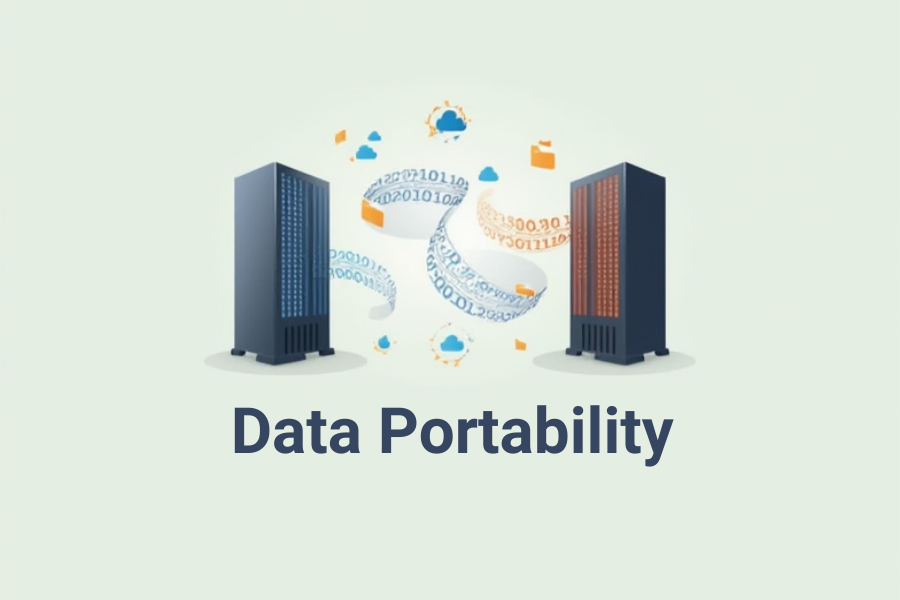
 Optometrists must take into account Canadian legislation and provincial requirements when it comes to data portability. Each province has laws that govern personal health information (PHI). These laws require that PHI remain confidential, accurate, and secure—even when transferring data between EMR systems.