

Part 1.
by Maryam Moharib, BOptom, BHSc, CSPO, CAPM
In today’s optometry practices, the electronic medical record (EMR) is much more than a digital filing cabinet. It is the hub for clinical decision-making, patient history, diagnostic imaging, prescriptions, and even practice management functions such as scheduling, billing, and recalls. However, with the rapid advancement of clinical technology, the EMR system that an optometrist once started with may no longer meet their needs.
Whether driven by the desire for better integration with diagnostic devices, frustration with outdated interfaces, or the need for cloud-based access, many clinics eventually consider switching systems.
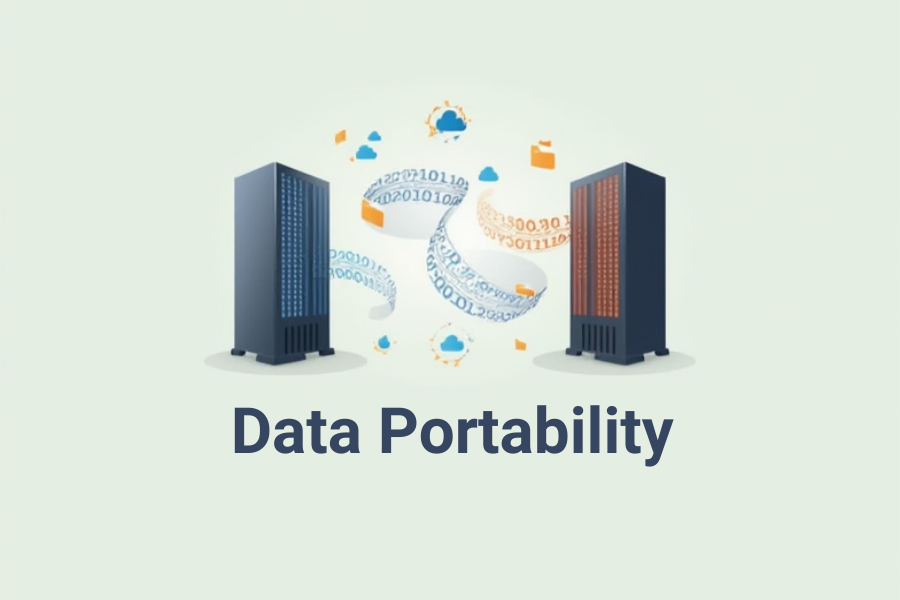
Yet the decision to move from one EMR to another is not always straightforward. One of the biggest hurdles is data portability—the ability to securely and effectively transfer patient information, records, and related data from one system into another. Understanding the challenges and responsibilities around data portability is essential for any optometrist planning such a transition.
Why Data Portability Matters
The value of an EMR lies in its data. Beyond basic demographics and clinical notes, optometry practices rely on structured information such as refraction histories, contact lens parameters, intraocular pressure readings, and optical coherence tomography (OCT) images. If this information cannot be migrated intact, a clinic risks losing critical historical data that guides patient care.
From a patient safety standpoint, incomplete or inaccurate migration could result in treatment errors, duplicate testing, or severe gaps in continuity of care. From a business standpoint, a failed migration can be costly, causing downtime, inefficiency, frustration, and patient dissatisfaction. Data portability, then, is not just a technical concern but a clinical and legal responsibility.
Legal and Regulatory Considerations
 Optometrists must take into account Canadian legislation and provincial requirements when it comes to data portability. Each province has laws that govern personal health information (PHI). These laws require that PHI remain confidential, accurate, and secure—even when transferring data between EMR systems.
In addition to PHI data encryption, provinces such as Ontario and Manitoba require certified EMR vendors to include functionality for data migration, ensuring that records can be easily exported in usable formats. These measures are designed to reduce vendor “lock-in” and encourage interoperability.
One of the most common data structures that hinder interoperability is the use of proprietary fields. Proprietary fields are custom data structures unique to a specific EMR system. They define how information is labeled, stored, or formatted, often in ways that don’t follow common standards. Because these fields are not universally recognized, other EMRs may be unable to interpret or import the data correctly during migration. This can lead to incomplete or inaccurate transfers, especially for complex information such as prescriptions or contact lens parameters. Ensuring that proprietary fields are properly mapped or converted into standardized formats is essential to preserve data accuracy when switching systems.
For example: One EMR might store contact lens prescriptions in a single combined field like “OD: -3.25 BC 8.6 DIA 14.0,” while another EMR stores each value—sphere, base curve, and diameter—in separate standardized fields. Because the data is structured differently, the new system may not recognize or correctly import the information unless it’s carefully mapped or reformatted.
Risks and Challenges
Switching EMRs comes with a unique set of risks that extend beyond simple data transfer. Common pitfalls include:
- Vendor lock-in and resistance: Some vendors make interoperability and exporting data difficult through unusable or proprietary formats, additional charges, delays, or restrictive policies.
- Data loss and corruption: Images or attachments might not map correctly, fields may get misaligned, metadata (like dates or authorship) may be lost or altered.
- Cost overruns and schedule delays: Hidden conversion challenges can quickly exceed expected timelines and budgets.
- Interoperability shortcomings: Even after migration, if the new system doesn’t integrate well with external labs, imaging devices, or pharmacies, the practice may still face data-sharing issues.
Each of these challenges emphasizes why data portability is not just an IT issue—it is also a clinical and operational issue.
The Takeaway
Data portability affects every part of continuity of patient care, practice efficiency, and legal compliance. Understanding the foundational issues—such as proprietary data structures, provincial PHI laws, and interoperability standards—is the first step in avoiding serious disruptions.
Switching EMRs is more than a technology upgrade—it’s a transformation of how a clinic manages patient information. By approaching migration with deliberate planning, vendor collaboration, and thorough validation, optometrists can protect the integrity of their data while gaining the advantages of modernized technological data systems.
A successful EMR migration ensures that the records that have been built over years remain intact, accessible, and clinically meaningful. With the right preparation, the migration can enhance—not interrupt—a practice’s ability to deliver excellent patient care.
In Part 2, the next article will explore the practical side of EMR migration: how to prepare the data, coordinate between vendors, and protect the clinic from data loss or workflow breakdowns during the transition.

Maryam Moharib, BOptom, BHSc, CSPO, CAPM
Maryam holds degrees in Health Sciences from the University of Ottawa and in Optometry from Anglia Ruskin University in Cambridge, England. She has dedicated many years to working alongside ophthalmologists in refractive surgical clinics, where she gained significant experience in clinical training and in EMR implementation for various software platforms.
Maryam has also worked as a certified product owner with an EMR software company where she played a key role in effectively bridging the gap between clinical needs and technology. Additionally, her certification in project management from the Project Management Institute has equipped her with the skills to lead implementation and transformative clinic projects successfully.