

OD Practice Strategy Series

The fall program opens with practice valuation and expands into AI, acquisition financing and tax planning — supported by a new confidential survey of Canadian optometrists.

A Fall Program Built Around Practice Decisions

Eye Care Business Canada’s Optometry Practice Strategies Series returns this fall with a new lineup of webinars designed to address practical business issues at different stages of optometric practice ownership.

The fall program begins September 16 with a session on practice valuation, followed by webinars exploring artificial intelligence, practice acquisition from a banker’s perspective, and tax planning for incorporated and non-incorporated optometrists. The series is designed to provide useful, practice-focused information while giving participants several ways to build continuing education into their schedules.

First Up: What Drives Practice Value?

Factors Driving Practice Value in Today’s Market will be presented by practice transition expert Jackie Joachim on Wednesday, September 16 at 7:00 PM EDT.

Whether an optometrist is considering a future sale, evaluating an acquisition or simply looking to strengthen the business, understanding what contributes to practice value can support better long-term decisions. The session will examine the factors that influence valuation in today’s market and help participants look at their practice through the lens of both current performance and future transferability.

COPE CE credit is available through qualifying live attendance at this webinar.

More to Come This Fall

The September 16 webinar is the first of four new fall sessions. On September 23, Dr. Abdullah Sarhan and Maryam Moharib will present AI Trends in Optometry: Cut Through the Noise. October then turns to the financial side of ownership, with Through a Banker’s Lens: Buying an Optometric Practice on October 7 and Keep More, Grow More: Tax Planning Strategies for Incorporated and Non-Incorporated Optometrists on October 28.

Each webinar can be registered for individually, or optometrists can register for multiple sessions through the series landing page.

New Survey: What Financial and Tax Resources Do Optometrists Need?

Alongside the fall program, Eye Care Business Canada is inviting optometrists to participate in a confidential survey focused on their needs and priorities related to banking, financial and tax services.

The survey is intended to help identify the areas where optometrists would benefit from more information, education and practical resources. Responses are confidential and the survey results will not be shared. Instead, the findings will be used internally to help shape future resources and better target content to the specific needs identified by optometrists.

Participants will also be eligible for a $500 prize pool.

Complete the survey HERE.

CIBC Commercial Banking Joins the Series

Eye Care Business Canada is also pleased to welcome CIBC Commercial Banking as a new sponsor of the Optometry Practice Strategies Series.

CIBC joins ROI Corporation, MNP, Tecksoft EHR and Théa Pharma Canada in supporting the series and its focus on practical education for Canadian optometrists.


Register for the Fall Series

Registration is free. Optometrists can register for any or all of the upcoming webinars at:

https://vuepoint.ac-page.com/ODPracticeStrategySeries



Share:
Rate:

0 / 5. 0

Diana Monea article AI and EMR Integrated into an Optometric Practice

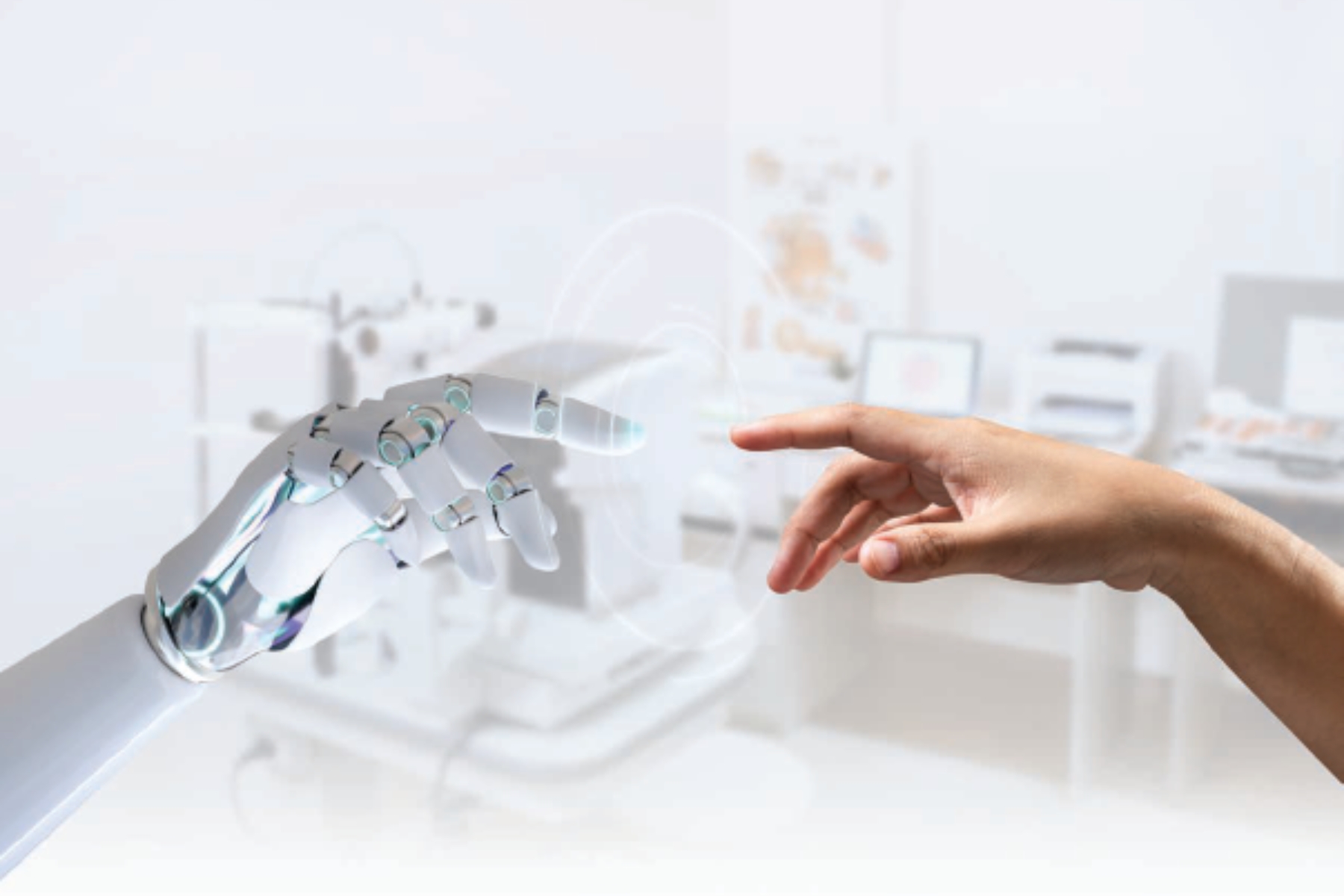
Optometry has evolved from paper files to digital records, from phone calls to virtual communication, and in the future, perhaps even to robots (bots) assisting humans. Every day, innovation takes on a new dimension as artificial intelligence (AI) is integrated into electronic medical record (EMR) systems. The future of communication and diagnostics in eye care remains uncertain: will AI replace parts of what we do, or simply help us work more efficiently, more accurately, and at lower cost while improving the patient experience?

  1. AI Reduces Office Time, Improves Documentation, and Enhances the Patient Experience

AI can capture the doctor–patient conversation and generate clinical notes automatically. Unlike basic dictation tools, more advanced systems can organize information into the appropriate sections such as chief complaint, history, exam findings, assessment, and plan.

AI can also support tasks such as:

  • Billing and coding support
  • Documenting diagnostic impressions and recommended next steps

Used well, these tools can improve the patient–doctor experience. The clinician can stay more present with the patient, while reducing clerical workload and documentation interruptions. This can also help reduce clinician burnout by making charting more seamless and efficient at the point of care, reducing the need for after-hours documentation.

2. Integrating AI and EMR

When AI outputs can be structured and integrated into an optometry EMR, the system can help identify patterns and automate repetitive, but necessary, tasks. Depending on the platform and workflow, AI-enabled EMR integration may support:

  • Prescriptions and documentation support
  • Referrals and communication templates
  • Treatment plan tracking and management
  • Patient education materials based on clinical findings
  • Interpretation support and clinical prompts
  • Revenue cycle support
  • Analytics and reporting

With thoughtful integration, the EMR can begin to function less like a passive record and more like an active clinical assistant.

3. AI Imaging as Clinical Support

OCT, fundus photography, corneal topography, and visual field data can be analyzed using AI models trained on large datasets. Applications may include:

  • Diabetic retinopathy screening
  • Glaucoma risk and progression monitoring
  • AMD risk stratification and progression tracking
  • Corneal irregularity detection
  • Automated comparison of serial scans

AI-powered support tools may also combine imaging with clinical measurements such as intraocular pressure, pachymetry, and refraction. These tools are not a replacement for clinical judgment, but they can add a layer of insight and help flag subtle changes that are easy to miss in busy practice.

4. AI’s Impact on Practice Management

Administrative inefficiencies are a major source of stress and cost in many practices. AI-enabled systems can assist with:

  • Insurance claim submission, verification, and follow-up
  • Coding support, rejection handling, and resubmissions
  • Appointment scheduling, reminders, and recall workflows

By reducing errors and repetitive front-desk work, AI can free staff to focus on higher-value patient service and practice operations; helping reduce administrative burden and improve consistency.

5. Patient Communication

AI can improve patient understanding and satisfaction by:

  • Providing personalized summaries of findings
  • Explaining recommendations and outcomes in plain language
  • Generating visuals or simplified graphics that help patients understand their results
  • Supporting appointment booking and capturing patient concerns ahead of visits
  • Providing relevant pre-visit or post-visit information for recommended procedures

Practice bonus: when patients are better informed, they are often more confident and more compliant, leading to smoother visits, fewer misunderstandings, and a stronger overall experience for patients, staff, and clinicians.

6. Standardization Through AI and EMR Connectivity

A major advantage of AI is its potential to integrate with EMR systems more seamlessly than older workflows. Historically, many EMRs operated in silos, requiring manual entry and increasing the risk of transcription errors.

With tighter device-to-EMR integration, key data, such as refractions, visual acuities, intraocular pressure measurements, and imaging results, can populate charts automatically. This reduces redundancy, improves accuracy, and supports standardization across the clinical team.

7. The Advantage of an AI-Enhanced Practice

When documentation, scheduling, coding, and routine analysis are partially automated, optometrists gain time to do what matters most: be human. That means having more capacity to educate, reassure, and build trust without sacrificing the operational demands of modern practice.

The future of optometry will be shaped by clinicians who use AI strategically to enhance care, reduce burnout, and elevate the patient experience. Practices that adopt AI, and integrate it effectively into their EMR, will be better positioned to improve efficiency, strengthen resilience, and pursue clinical excellence in the face of tomorrow’s practice challenges.


Dr. Diana Mae Monea, OD, FAAO, MHRM

Dr. Diana M. Monea, OD

Dr. Diana M. Monea is an award-winning optometrist, author, and keynote speaker with more than four decades of leadership in clinical practice, business ownership, and professional education. Founder and former CEO of Eye Health Centres, she now focuses on consulting, mentorship, patient care, and public speaking.


Share:
Rate:

0 / 5. 0