

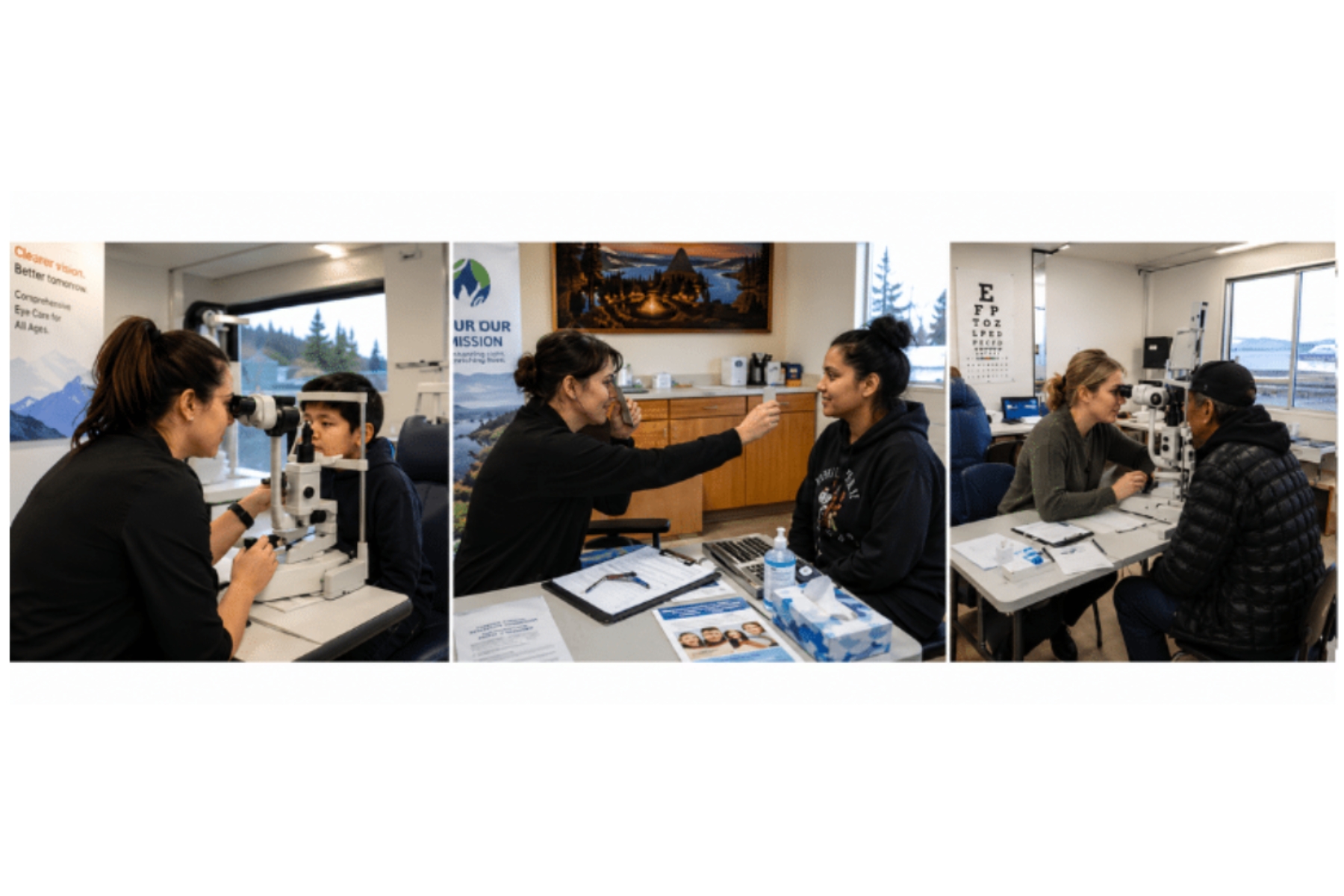
As an optometrist, I had the privilege of working with First Nations in Saskatchewan, delivering eye care services. During that time, I travelled to Indigenous reserves and remote communities, including Gordon’s Reserve, which is home to one of the last Canadian residential schools.
Those experiences formed my understanding of what vision care truly requires. It is not only about diagnosing eye health conditions, determining refractive errors, and prescribing glasses, but equally about access, trust, and empathy.
Access is the Issue
One of the most consistent realities I observed was that willingness to seek eye health care was not the issue; access was. Many parents wanted their children to receive vision care but faced long travel distances, limited transportation, weather, and economic restraints.
In many communities, bringing optometric services directly to patients was the only effective way to ensure children received comprehensive eye examinations. Adjustable scheduling, reminder systems, assistance with insurance navigation, and collaboration with Indigenous health workers can reduce barriers to such care. I found that strong partnerships with schools, community leaders, and health representatives further supported continuity of care and reduced the risk of patients being lost to follow-up.
Among the many children I examined, significant uncorrected vision problems were identified, particularly refractive errors, often accompanied by high astigmatism and myopia. Many of these children had never worn glasses or had access to a comprehensive eye health exam. With appropriate spectacle correction and visual intervention, the positive change in a child’s demeanour was often immediate, with improved vision, greater confidence, and more engaged classroom participation and learning.
It is widely believed that 80% of learning occurs through vision, a key element of education. When a child cannot see clearly, tasks such as reading, writing, and board work become unnecessarily difficult. A child who has not been seen differently becomes frustrated and feels they are not smart enough, which may result in “labelling” and limited personal expectations.
Our Role as Eye Care Practitioners
As eye care practitioners, it is critical that we help eliminate visual barriers that may impede a child’s development. Proper visual intervention, addressed early, is one of the most effective supports for a child’s sustained academic success and potential. In many provinces, the Eye See I Learn program helps educate parents and teachers about early eye health exams. In some provinces, such as Alberta, barriers to accessing spectacles are eliminated by giving a free pair of glasses through the Eye See, I Learn program for kindergarten students.
Today, barriers to accessing effective eye health care persist. Geographic isolation, transportation challenges, cost of eyewear, and inconsistent follow-up care all remain major obstacles for many Indigenous patients. Further, the tragic legacy left by residential schools has influenced a wavering, uncertain trust among Indigenous patients with respect to medical systems. As a result, culturally safe care and understanding are essential in every patient encounter.
Cultural safety requires humility, respect, and consistency, which are necessary to build trust in every situation and visit. To develop trust, eye care practitioners must hear the patient’s concern without prejudice, while clearly explaining diagnoses and treatment options. When necessary and appropriate, families may need to be involved, so always ask the patient for permission.
Industry Collaboration Helps Close the Gap
On a very favourable note, there is encouraging progress within the Canadian optical industry. Today, Canadian eyewear companies such as AYA Optical, an Indigenous Canadian spectacle frame manufacturer in British Columbia, are remodeling the industry by combining selectively designed frames with authentic Indigenous artwork, incorporating clinical eyewear needs, cultural narration, and Canadian design innovation in a meaningful way.
Closing the gap in Indigenous vision care will require commitment from all stakeholders in the healthcare system. Every examination, every conversation, and every act of cultural respect contribute to significant change. The most important lesson I have learned from years of optometric practice since 1978 is that eye care is about people first.
When patients feel respected, understood, and supported, better clinical outcomes occur. It is important for eye care practitioners to remember that better vision unseals doors—but trust is what allows people to access them.
Dr. Diana M. Monea, OD
Dr. Diana M. Monea is an award-winning optometrist, author, and keynote speaker with more than four decades of leadership in clinical practice, business ownership, and professional education. Founder and former CEO of Eye Health Centres, she now focuses on consulting, mentorship, patient care, and public speaking.