

Diana Monea article AI and EMR Integrated into an Optometric Practice

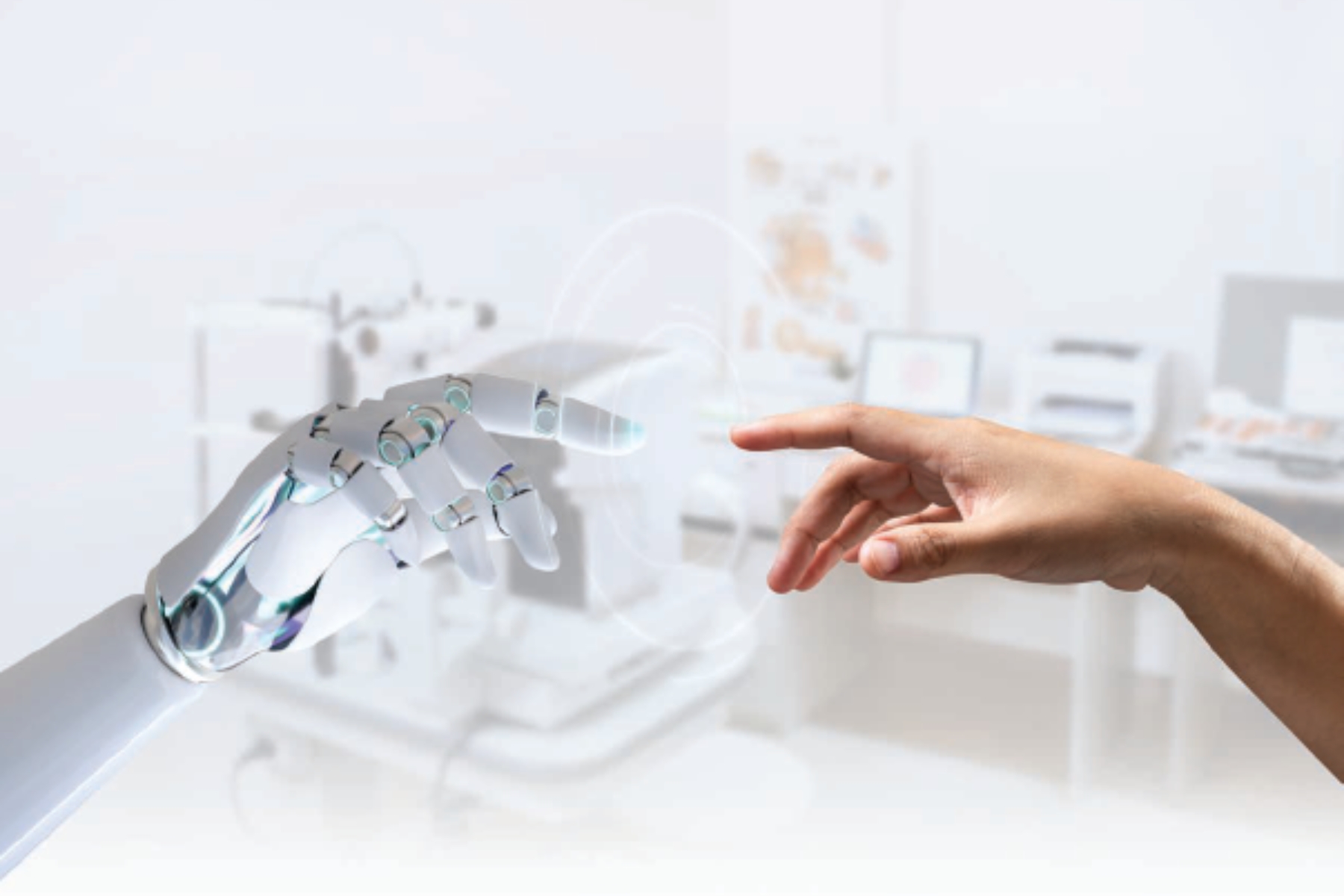
Optometry has evolved from paper files to digital records, from phone calls to virtual communication, and in the future, perhaps even to robots (bots) assisting humans. Every day, innovation takes on a new dimension as artificial intelligence (AI) is integrated into electronic medical record (EMR) systems. The future of communication and diagnostics in eye care remains uncertain: will AI replace parts of what we do, or simply help us work more efficiently, more accurately, and at lower cost while improving the patient experience?

  1. AI Reduces Office Time, Improves Documentation, and Enhances the Patient Experience

AI can capture the doctor–patient conversation and generate clinical notes automatically. Unlike basic dictation tools, more advanced systems can organize information into the appropriate sections such as chief complaint, history, exam findings, assessment, and plan.

AI can also support tasks such as:

  • Billing and coding support
  • Documenting diagnostic impressions and recommended next steps

Used well, these tools can improve the patient–doctor experience. The clinician can stay more present with the patient, while reducing clerical workload and documentation interruptions. This can also help reduce clinician burnout by making charting more seamless and efficient at the point of care, reducing the need for after-hours documentation.

2. Integrating AI and EMR

When AI outputs can be structured and integrated into an optometry EMR, the system can help identify patterns and automate repetitive, but necessary, tasks. Depending on the platform and workflow, AI-enabled EMR integration may support:

  • Prescriptions and documentation support
  • Referrals and communication templates
  • Treatment plan tracking and management
  • Patient education materials based on clinical findings
  • Interpretation support and clinical prompts
  • Revenue cycle support
  • Analytics and reporting

With thoughtful integration, the EMR can begin to function less like a passive record and more like an active clinical assistant.

3. AI Imaging as Clinical Support

OCT, fundus photography, corneal topography, and visual field data can be analyzed using AI models trained on large datasets. Applications may include:

  • Diabetic retinopathy screening
  • Glaucoma risk and progression monitoring
  • AMD risk stratification and progression tracking
  • Corneal irregularity detection
  • Automated comparison of serial scans

AI-powered support tools may also combine imaging with clinical measurements such as intraocular pressure, pachymetry, and refraction. These tools are not a replacement for clinical judgment, but they can add a layer of insight and help flag subtle changes that are easy to miss in busy practice.

4. AI’s Impact on Practice Management

Administrative inefficiencies are a major source of stress and cost in many practices. AI-enabled systems can assist with:

  • Insurance claim submission, verification, and follow-up
  • Coding support, rejection handling, and resubmissions
  • Appointment scheduling, reminders, and recall workflows

By reducing errors and repetitive front-desk work, AI can free staff to focus on higher-value patient service and practice operations; helping reduce administrative burden and improve consistency.

5. Patient Communication

AI can improve patient understanding and satisfaction by:

  • Providing personalized summaries of findings
  • Explaining recommendations and outcomes in plain language
  • Generating visuals or simplified graphics that help patients understand their results
  • Supporting appointment booking and capturing patient concerns ahead of visits
  • Providing relevant pre-visit or post-visit information for recommended procedures

Practice bonus: when patients are better informed, they are often more confident and more compliant, leading to smoother visits, fewer misunderstandings, and a stronger overall experience for patients, staff, and clinicians.

6. Standardization Through AI and EMR Connectivity

A major advantage of AI is its potential to integrate with EMR systems more seamlessly than older workflows. Historically, many EMRs operated in silos, requiring manual entry and increasing the risk of transcription errors.

With tighter device-to-EMR integration, key data, such as refractions, visual acuities, intraocular pressure measurements, and imaging results, can populate charts automatically. This reduces redundancy, improves accuracy, and supports standardization across the clinical team.

7. The Advantage of an AI-Enhanced Practice

When documentation, scheduling, coding, and routine analysis are partially automated, optometrists gain time to do what matters most: be human. That means having more capacity to educate, reassure, and build trust without sacrificing the operational demands of modern practice.

The future of optometry will be shaped by clinicians who use AI strategically to enhance care, reduce burnout, and elevate the patient experience. Practices that adopt AI, and integrate it effectively into their EMR, will be better positioned to improve efficiency, strengthen resilience, and pursue clinical excellence in the face of tomorrow’s practice challenges.



Dr. Diana Mae Monea, OD, FAAO, MHRM

Dr. Diana M. Monea, OD

Dr. Diana M. Monea is an award-winning optometrist, author, and keynote speaker with more than four decades of leadership in clinical practice, business ownership, and professional education. Founder and former CEO of Eye Health Centres, she now focuses on consulting, mentorship, patient care, and public speaking.


Share:
Rate:

0 / 5. 0

Jade Bodzasy article The Paper Trail of Frustration

You know that feeling. It’s the end of a grueling day of back-to-back refractions, and you’ve just finished with a particularly challenging patient. You sit down at your computer, exhausted and perhaps a bit annoyed. In that high-pressure moment, your Electronic Medical Record (EMR) often becomes an unintended outlet for your stress.

It is incredibly easy for your internal state, whether it’s frustration or pure exhaustion, to “leak” into your documentation. But we live in an era where patients have immediate legal access to every word you type. Because of this, your ability to pivot from an emotional reaction to a neutral, EQ-informed observation isn’t just a nice “soft skill”, it’s a professional necessity.

The Trap of “Emotional Leakage”

Emotional Intelligence (EQ) starts with your own self-awareness. In the context of note-writing, this means catching yourself when your current mood is steering your keyboard. When you’re frustrated, your notes tend to shift from objective observations to subjective judgments.

Keep an eye out for these “red flag” words that signal emotional leakage:

  • “Difficult”
  • “Uncooperative”
  • “Demanding”

These terms don’t actually provide clinical value; they just serve as a digital “vent.” The real danger is the Bias Echo. These labels can follow a patient indefinitely, creating a cycle where every technician or specialist who sees that chart next approaches the patient with the same preconceived frustration you felt.

The Legal Reality: Your Patient is Reading

The medical record has evolved. It’s no longer a private, “behind-the-scenes” dialogue between professionals; it is a shared document. Thanks to patient portals, your patients can—and do—read your notes.

Imagine a patient reading a note that characterizes their behavior as “aggressive” or “hostile.” If they were acting out because they were terrified of losing their vision or didn’t understand the procedure, reading those words can be traumatizing. Once that therapeutic alliance is fractured by a poorly worded note, the professional repercussions are real. A note written in a moment of pique can quickly become primary evidence of perceived bias.

Your New Skill: Neutral Reframing

The core EQ skill you need to master is Neutral Reframing. This is the process of taking the “raw data” of a frustrating interaction and stripping away the emotional adjectives to reveal the clinical facts. You aren’t omitting what happened; you are describing it with such objectivity that the behavior speaks for itself.

Restoring Relational Clarity

When you choose neutral language, you achieve Relational Clarity. You are documenting the truth of the encounter while protecting your professional integrity. Most importantly, you are leaving the door open for a successful interaction next time. A neutral note gives the next professional a baseline to solve the problem (like improving drop ergonomics) rather than just bracing themselves to manage a “difficult” person.

Documentation as a Human Skill

Your success in eye care is increasingly defined by your human skills. High-EQ record keeping is an act of discipline. It requires you to pause, acknowledge your own frustration, and choose a narrative that serves both the patient’s health and your own career longevity. Feelings are temporary, but the record is permanent.

Is Your Team Prepared for the “Open Notes” Era?

Mastering neutral, high-EQ record keeping is essential for protecting your practice and fostering patient trust. I help eye care professionals and team leaders build the relational clarity needed to thrive in high-pressure environments.

Learn more at: www.emotionalintelligenceconsultinginc.com


Jade Bodzasy

Jade Bodzasy

Jade Bodzasy, Founder of Emotional Intelligence Consulting Inc., is a dedicated Coach and Consultant for Optometric Practices. Her extensive background includes over 20,000 hours of expertise focused on customer relations, work structure refinement, training method development, and fostering improved work culture within Optometric practices.

Certified in Rational Emotive Behavior Techniques (REBT), Jade possesses a unique skillset that empowers individuals to gain profound insights into the origins of their behaviors, as well as those of others. Leveraging her certification, she equips optometry practices with invaluable resources and expert guidance to establish and sustain a positive, healthful, and productive work environment.


Share:
Rate:

0 / 5. 0

Maryam article part 2 on her EMR series

In part 1 of explored why data portability matters and the legal and technical challenges that can arise when switching EMRs in optometry clinics.

Now that the “why” is clear, it’s time to understand the “how.” In this article, we’ll look at how to make the data transition smooth, secure and ensure that it all safely arrives in the appropriate patient fields.

Migrating from one EMR to another is one of the most significant digital transformations a clinic can undertake. When done well, it can modernize workflows, improve operational efficiency, and strengthen patient care. Without proper preparation, however, it can lead to disruption, data loss, and frustration.

This guide outlines the essential steps for preparing your clinic for a smooth, secure, and compliant EMR migration.

Optometry-Specific Data Considerations

Optometry data presents unique challenges beyond those in general medicine. It combines clinical information, diagnostic imaging, and retail operations.  Knowing exactly what data your current EMR holds—and how it’s structured—is the foundation of a successful migration.

Optometric data categories can include:

  • Diagnostic Imaging: OCT scans, fundus photographs, and corneal topographies often exist in large, specialized file formats (like DICOM). Without proper planning, images may be reduced to static PDFs, losing their interactive diagnostic value. It is important to ensure the new EMR can import them, or integrate with image viewers that can.
  • Refractive Prescription Data: Accurate migration of eyeglass and contact lens prescriptions is critical. If stored in proprietary or semi-structured fields, these values (sphere, base curve, diameter) must be carefully mapped to ensure accuracy in the new system.
  • Dispensing and Inventory Records: Practices that use their EMR for optical sales, lens ordering, or frame inventory must decide whether to migrate this data or archive it separately.
  • Device Integration: Diagnostic devices such as autorefractors, tonometers, and lensometers generate logs and measurements that must remain retrievable. Ensure that these files can either be migrated or securely archived, and verify that the new EMR supports existing device integrations.
  • Patient Consent and Signatures: Electronic signatures and digital consent forms are legally binding and must remain properly linked to patient files after migration.
  • Recalls, Reminders, and Visit History: Recall schedules, reminders, and visit histories form the backbone of ongoing patient management. When migrating EMRs, it is important to ensure that patient histories, previous diagnoses (e.g., glaucoma, diabetic retinopathy), and recall intervals transfer completely. This preserves continuity of care and supports proactive follow-up with patients.

💡 Quick Tip: Create a data inventory spreadsheet listing each data type, where it resides, and whether it needs to be migrated, archived, or can be left behind.

Key Considerations Before You Switch

Long before signing a contract with a new EMR vendor, it’s important to ask the right questions. The clarity that is established at an earlier stage will define the success of the migration later on.

  1. Export Formats: Ask the current vendor how data will be exported. Will it be delivered as structured data (e.g., HL7 or FHIR standards) or unstructured PDFs? Structured data allows for better integration and ongoing use.
  2. Costs and Timelines: Data extraction and migration often involve fees. Obtain written estimates outlining costs, timelines, and the level of support included.
  3. Security Measures: Ensure all data will be encrypted during transfer, and that storage and hosting comply with Canadian and provincial data requirements.
  4. Validation Testing: Conduct a pilot migration using a small dataset. Compare records between systems to confirm accuracy before proceeding with a full migration.
  5. Access to Legacy Records: Even with a successful migration, some data may remain easier to view in the old system. Ensure maintenance of read-only access to legacy records for reference.

🔒 Did You Know?
Under Canadian privacy law, optometrists remain the custodians of patient data even after switching vendors. This means the optometrist is responsible for its integrity and accessibility during and after migration—not the EMR provider.

Preparing for an EMR Migration

A structured plan is the strongest indicator of success. Clinics that invest time in preparation, communication, and testing, experience far fewer disruptions once the new EMR goes live.

  • Inventory Your Data: Catalogue the types of information stored in the current EMR—demographics, clinical notes, prescriptions, imaging, billing, and administrative data.
  • Engage Both Vendors: The smoothest migrations occur when the outgoing and incoming vendors communicate directly. Define clear migration deliverables, timelines, responsibilities, and success criteria in the new vendor’s contract.
  • Plan for Staff Training: Staff should be trained not only on the new system but also on how to access legacy data and verify migrated records.
  • Schedule Wisely: Choose a transition window that minimizes patient disruption—ideally outside peak exam seasons.
  • Budget Realistically: Factor in not only vendor fees but also staff time, temporary productivity dips, and any dual-system access costs.

🧭 Quick Tip: Migrate in stages. Start with a small batch of patient records, validate accuracy, and then expand. Incremental testing builds confidence and minimizes risk.

 Validation and Testing

Once a pilot migration is complete, validate the data thoroughly. Compare patient records across systems to ensure accuracy of key fields such as diagnoses, prescriptions, and imaging files. Pay close attention to dates, authorship, and attachments—these are often the first areas where discrepancies arise.

Involve staff from various roles in the validation process; clinicians and administrative users often notice different types of errors. Once the pilot data is confirmed accurate and functional, proceed with the full migration confidently.

 The Bottom Line for Clinics

Migrating to a new EMR is a significant undertaking, but it doesn’t have to be disruptive. By planning strategically—mapping data carefully, ensuring vendor collaboration, testing thoroughly, ensuring legal compliance, and training staff—years of valuable patient information can be protected while setting your clinic up for long-term success.

Ultimately, a well-executed migration is not just about transferring data—it’s about preserving clinical integrity, enhancing workflow, and empowering your team to deliver exceptional patient care within a more advanced, efficient system.


Maryam Moharib

Maryam Moharib, BOptom, BHSc, CSPO, CAPM

Maryam holds degrees in Health Sciences from the University of Ottawa and in Optometry from Anglia Ruskin University in Cambridge, England. She has dedicated many years to working alongside ophthalmologists in refractive surgical clinics, where she gained significant experience in clinical training and in EMR implementation for various software platforms.

Maryam has also worked as a certified product owner with an EMR software company where she played a key role in effectively bridging the gap between clinical needs and technology. Additionally, her certification in project management from the Project Management Institute has equipped her with the skills to lead implementation and transformative clinic projects successfully.


Share:
Rate:

0 / 5. 0